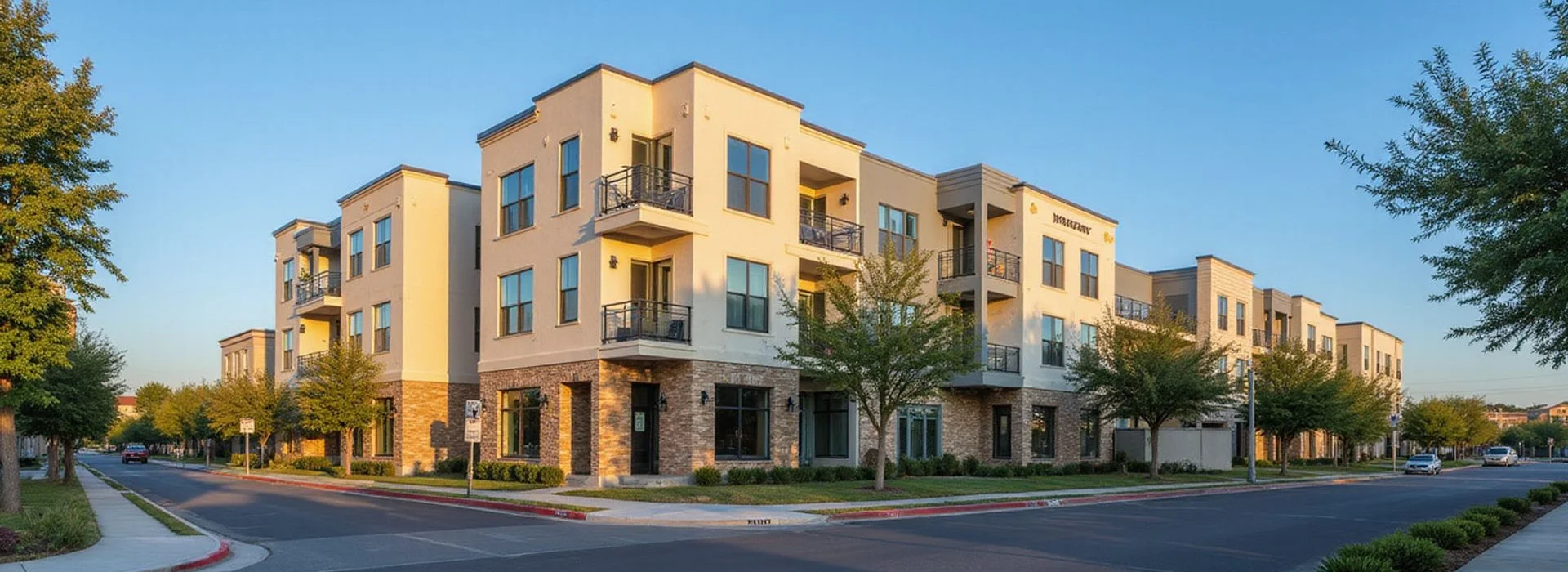
How Income-Restricted New Apartments Work: AMI, LIHTC, and PFC Units
Restricted, mixed, and PFC or essential-housing units explained: AMI tiers, LIHTC, PFC and HFC rules, and how mixed buildings work.
New San Antonio Apartment Team ·
Free to you, and your rent is the same either way · 111 new communities tracked · Prices pulled every morning
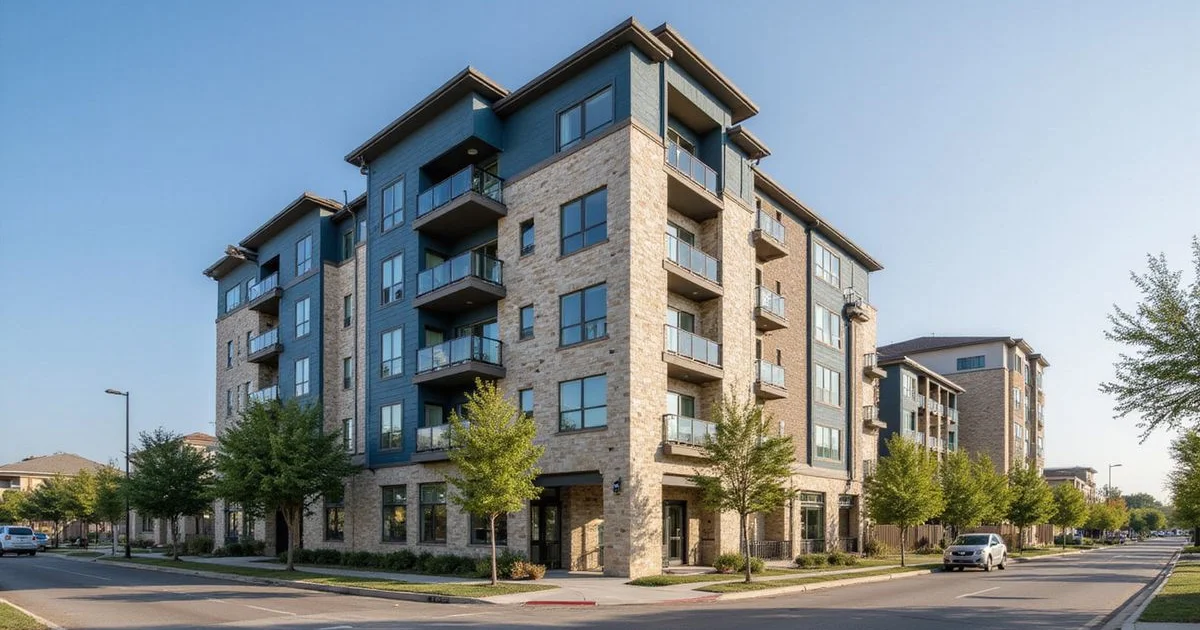
How do income-restricted new apartments work?
We regularly evaluate local real estate trends, and the growing number of income-restricted units is a major shift. The question of what is ami housing frequently arises when local employers search for workforce living options. Our team designed this resource to clarify exactly how these affordable leasing models operate.
Specific units in a new building are set aside for households under an income limit, defined as a percentage of Area Median Income (AMI). We trace these limits back to the program that funded the property, such as LIHTC, a Public Facility Corporation (PFC), or a Housing Finance Corporation (HFC). On October 25, 2026, 15 buildings carried a “Who can rent here” label on the board.
Our guide explains what those labels mean for income-restricted and 55+ new apartments.
Clear labels sit directly above the price, displaying their source and date to everyone. Our data completely excludes these specialized properties from standard market-rate math. The visual indicators are shown to everyone the exact same way.
The community decides eligibility
We explain the label and get the program’s criteria in writing. The community applies the rules and decides who qualifies.
What is AMI housing and how do the tiers work?
Our analysis relies on the Area Median Income, which represents the midpoint household income for a specific region. Programs establish limits as exact percentages of AMI, such as 50%, 60%, 70%, or 80%.
2026 Bexar County Baseline
The Department of Housing and Urban Development (HUD) sets the 2026 median income for the area at $100,600.
We use this baseline figure to calculate exact qualification thresholds. A 60% AMI unit targets households earning up to 60% of that median figure, adjusted carefully for household size.
We always remind clients that larger families receive higher income allowances than single renters. Rents on those specific units are strictly capped to maintain affordability. Our team recommends reviewing the Bexar County income limits for a full breakdown of the 2026 figures.
LIHTC
The Low-Income Housing Tax Credit program helps fund many restricted buildings across the state. We track several lihtc apartments san antonio, as they represent a major portion of local affordable units.
State Oversight
The Texas Department of Housing and Community Affairs (TDHCA) actively monitors and regulates these specific properties.
Our researchers note that LIHTC units carry strict limits on both income and rent amounts. Properties often cap eligibility at 60% AMI, meaning the rent cannot exceed a set percentage of that designated income level.
We currently show Bluff View at Frederick Creek on the board as a labeled LIHTC 60% property. Utility allowances are also factored into the final rent calculation to prevent unexpected cost burdens.
PFC and HFC buildings
We frequently encounter Public Facility Corporation (PFC) or Housing Finance Corporation (HFC) properties when surveying the market. A local governmental entity partners with a private developer to provide a 100% property tax benefit in exchange for setting aside units by income. Our data reflects the major changes from Texas HB 2071, passed in 2023, which reformed these deals.
The new law requires developers of pfc apartments san antonio to reserve at least 10% of units for renters at 60% AMI, alongside a 40% allocation for the 80% AMI tier. We pay close attention to the new TDHCA compliance audits that began on June 1, 2024, to ensure properties maintain their required standards. The term “essential housing” usually refers to these specific units for households in the 60% to 80% AMI range.
We also verify voucher compliance, as HFC buildings must accept housing vouchers under Texas Local Government Code §394.9026. Check where new apartments must accept vouchers for more details.
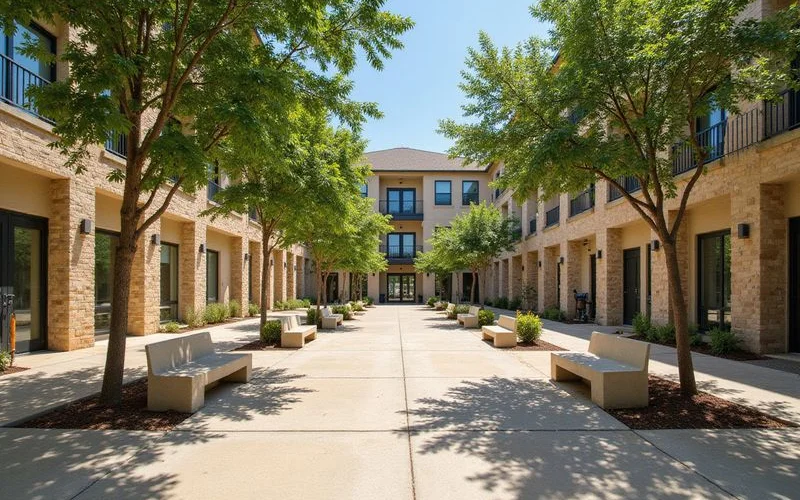
Fully restricted vs mixed buildings
We categorize buildings into different operational types based on their specific restriction levels. The table below outlines how these classifications dictate the tenant experience.
| Type | What it means | Board examples (Oct 25, 2026) |
|---|---|---|
| All restricted | Every unit has an income limit | Sosa at Palo Alto, Lofts at Creekview, Palladium San Antonio, Palladium Crestway, Sageland Flats |
| Every household capped | All households under one AMI cap | Aviator 1518 (70% AMI) |
| LIHTC | Tax-credit units with income and rent limits | Bluff View at Frederick Creek (60%) |
| Mixed | Some market-rate, some restricted | The Continental (half at 60-80%), Lumen (50/80 AFF plans) |
| PFC | Units set aside under a PFC deal | Potranco Commons and The Josephine (Opportunity Home PFC), Caroline at Rogers Ranch (Housing Trust PFC) |
| Essential housing | Units for middle-income households | Alamo Residences at Spurs Lane |
| 55+ and restricted | Age and income restrictions | Residences at Pearsall Park |
We find that mixed buildings present a unique dynamic for prospective renters. Market-rate units follow the community’s standard criteria, while restricted units strictly follow the program’s income and rent limits. Our advisors recommend clarifying amenity access, as all residents typically share the same pools and fitness centers regardless of their rent tier.
Why we keep labeled buildings out of market-rate math
Restricted rents are set by strict program rules, rather than normal market demand. We know that mixing these artificial prices into area averages creates a highly misleading picture.
The Data Skew
Blending a $900 restricted rent with a $1,500 market rent artificially drags the area median down to $1,200.
Our calculations prove that this sudden drop makes an area look much cheaper than it actually is for most renters. This statistical blending also effectively hides the specialized units from the people who actually need them. We display labeled buildings on the board with their clear indicator, but intentionally exclude them from market-rate medians and comparisons.
Questions to ask about a labeled building
The program label simply identifies the funding source and general rules. We advise renters to ask the leasing office exactly how the local policies apply to their specific household. Add these crucial questions to your touring checklist to avoid surprises:
- Which specific AMI tier applies to this unit, and what are the exact minimum and maximum income limits for my household size?
- Are these specialized units available today, or do I need to join an active waitlist?
- How does your compliance office verify income, and which exact tax documents will speed up the process?
- Do mandatory add-on fees, like valet trash or premium parking, push the total cost above the restricted rent cap?
- Does the property legally accept housing choice vouchers for this specific floor plan?
- Is the income restriction tied permanently to the unit, or does it float across the whole building?
We see answers vary wildly even between buildings carrying similar labels. Written confirmation is the only way to guarantee the terms for every labeled building on a shortlist.
How restrictions affect year two
We receive many questions about what happens when a restricted lease comes up for renewal. Restricted rents are governed by program limits, which receive an update each year based on HUD calculations.
Controlled Increases
Median incomes historically rise by 2% to 5% annually, meaning restricted rents often see a slight, proportional increase.
We remind tenants that a renewal in a restricted unit usually follows these new limits, rather than a standard market renewal offer. Renters in a mixed building must ask which type of unit they are signing for and how the next year’s renewal will be calculated. We constantly monitor mixed buildings, where market-rate units follow the community’s normal renewal pricing algorithms.
How we keep labels fair
Our platform displays every label with a transparent source and a clear date. These crucial labels are completely visible to everyone, utilizing a filter anyone can easily operate.
Privacy First
The system personalizes results strictly based on provided preferences, avoiding any questions about protected characteristics.
We never push labeled buildings to specific groups or hide them from any particular user. Some labels are still being confirmed, including the exact restricted share at Palladium Canyon Park and sponsors at several buildings.
We log all changes on our corrections page the moment a detail is officially verified, ensuring you have the facts to understand what is ami housing. Clear visibility empowers everyone to make the best decision for their specific situation. We encourage you to check our active board regularly to see these dynamic updates applied in real-time.
Learn more about Income-Restricted and 55+ New Apartments in San Antonio
'Who can rent here' labels for 15 buildings, with source and date.
Written by · Reviewed by · Updated October 25, 2026
New San Antonio Apartment Team
Licensed apartment team, Spirit Real Estate Group, LLC
The New San Antonio Apartment Team tracks ground-up new apartments across Bexar, Comal, Guadalupe, and Kendall counties and prices every special in plain numbers. The team is brokered by Spirit Real Estate Group, LLC, TREC #562021, and is free to renters.
Brokered by Spirit Real Estate Group, LLC, TREC #562021